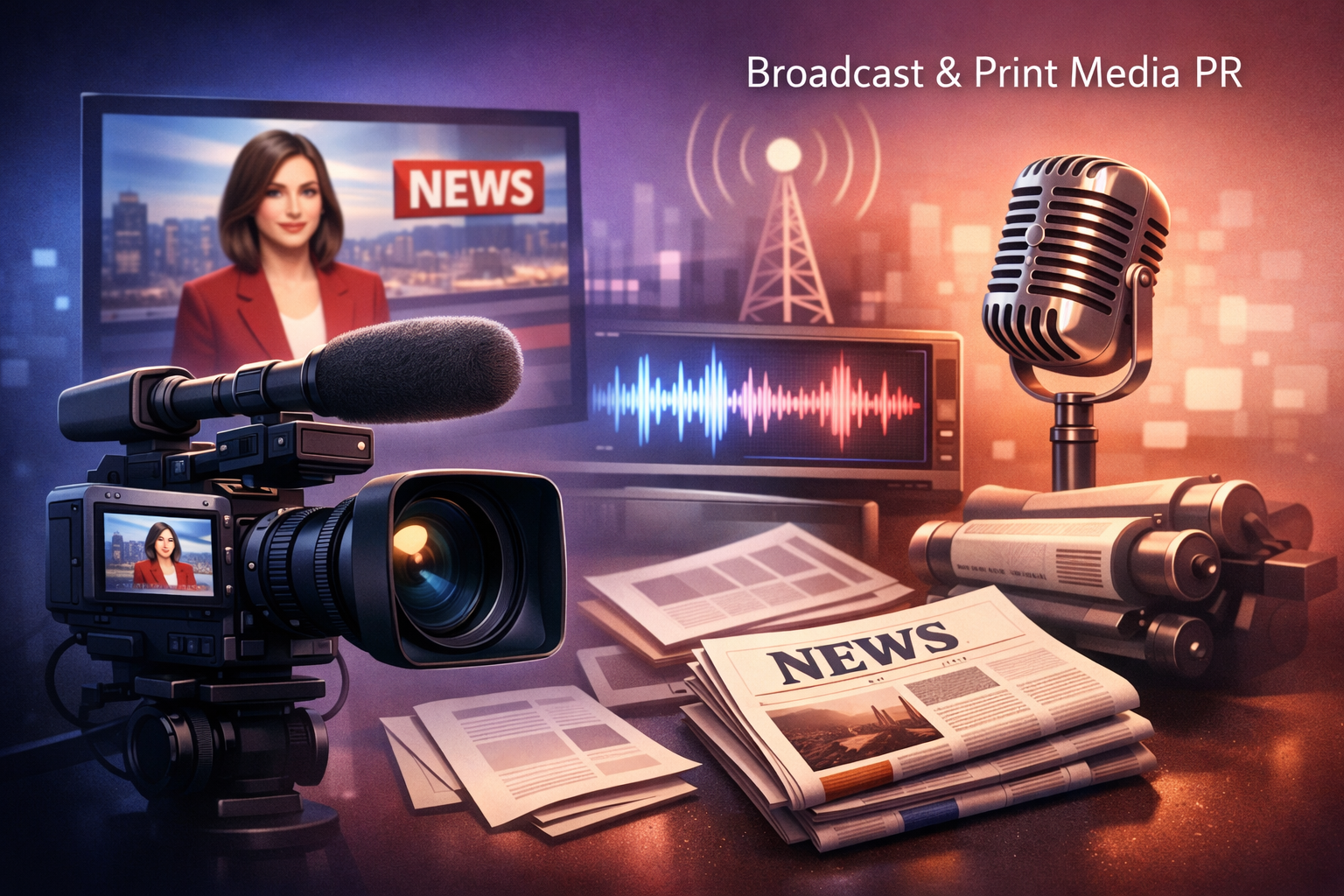

Broadcast & Print Media PR remains a powerful way to earn shape narratives, and build lasting brand credibility.
It’s easy to think everything happens online now. Scrolls, clicks, quick wins. But real influence often starts somewhere else—on a TV screen, over the radio, or in the pages people still trust.
That’s where Broadcast & Print Media PR quietly does its best work. It doesn’t chase attention. It earns it. A mention on the evening news. A quote in a respected magazine. A radio interview that sounds more like a conversation than a pitch. These moments carry weight because they feel chosen, not pushed.
More importantly, traditional media shapes how stories are understood. It adds context. It builds credibility. And while digital channels move fast, broadcast and print slow things down just enough for messages to actually land. That’s why, even now, they still matter.
The Role of Broadcast & Print Media in Modern PR
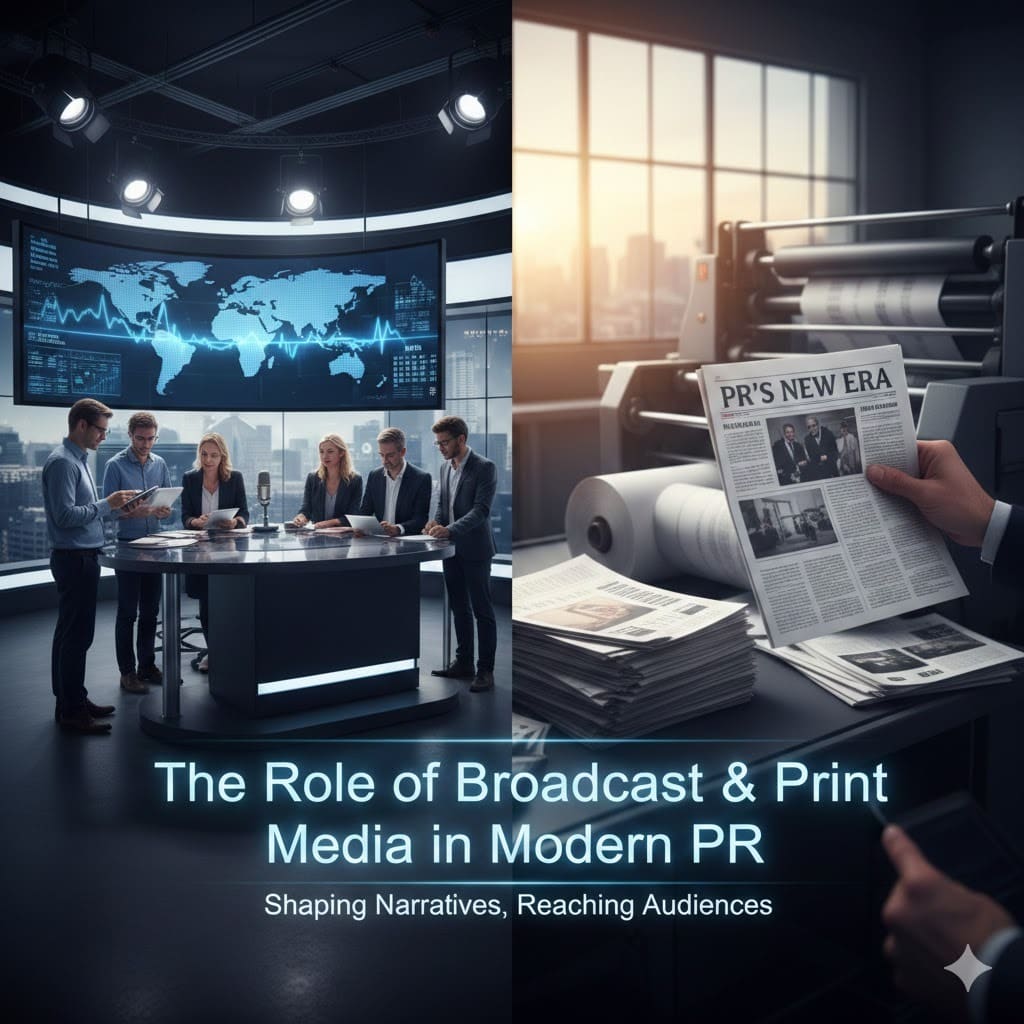
For a long time, PR was measured by visibility. How many people saw it? How far it traveled or fast it spread. But modern PR works a little differently. Today, it’s not just about being seen. It’s about being believed. That’s where broadcast and print step in.
Credibility Over Clicks
Television, radio, and print come with built-in trust. These platforms don’t publish everything that comes their way. Stories are filtered. Questions are asked. Angles are challenged. And because of that, when a brand shows up there, it feels earned.
Broadcast & Print Media PR thrives on this exact dynamic. A TV interview carries more weight than a paid ad. A quote in a respected publication often lands harder than a hundred social posts. It’s not louder. It’s stronger.
Shaping the Narrative, Not Chasing It
Digital media reacts quickly. Sometimes too quickly. Trends change by the hour. Narratives shift overnight. Traditional media, on the other hand, slows things down just enough to add meaning.
Print features offer room for context. Radio interviews allow nuance. Television segments bring both voice and presence into the story. Together, they help shape how a brand is understood, not just noticed. Instead of chasing attention, broadcast and print help guide the conversation.
Where Earned Media Still Wins
Another key role of traditional PR is validation. Being featured by a trusted outlet signals that a story is worth telling. It tells audiences, investors, and partners that someone else did the homework.
This is why many modern PR strategies still lean on broadcast and print during critical moments. Product launches. Market expansion. Leadership positioning. Crisis response. When the stakes are high, earned media matters more than ever.
At firms like Impact Authority, this approach is often central. Not because it’s old-school, but because it works. Especially when credibility is the goal.
The Bridge Between Traditional and Digital
Broadcast and print don’t live in isolation anymore. They fuel everything else. A TV appearance becomes a social clip. A print interview turns into a thought leadership post. A radio segment gets shared across platforms.
In this way, traditional media doesn’t compete with digital PR. It strengthens it. It provides the foundation that online channels build upon. Without that base, messages can feel hollow. With it, they feel grounded.
Why Modern PR Still Needs Both
At its core, modern PR is about balance. Speed and depth. Reach and trust. Digital channels deliver immediacy. Broadcast and print deliver authority.
And when used together, they do something powerful. They make stories stick. They turn visibility into belief. That’s the real role of broadcast and print in today’s PR landscape—and why they remain essential, even in a world that never stops scrolling.
Television Publicity: Visibility at Scale
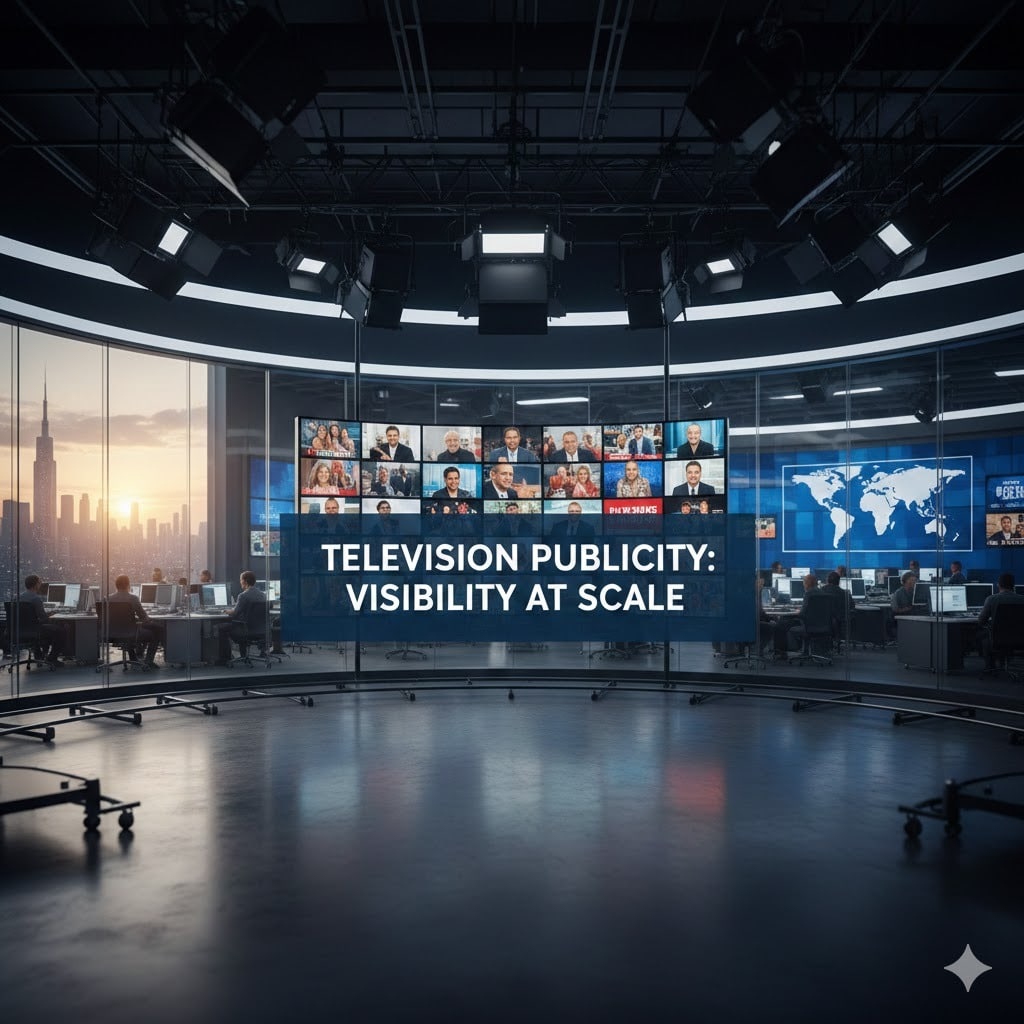
Television has a way of cutting through noise. One moment, a brand is unfamiliar. Next, it feels established. That shift can happen in minutes. Not because TV is flashy, but because it feels real. Faces. Voices. Context. All at once. In the world of Broadcast & Print Media PR, television remains the fastest path to mass credibility.
Why TV Still Carries Weight
People may scroll past ads, but they pause for stories. Especially when those stories appear on the news or a trusted program. Television coverage feels selected, not placed. That distinction matters.
A short segment can do what months of digital posting sometimes can’t. It signals relevance. It suggests authority. And it tells viewers, quietly but clearly, that this story is worth their time.
National vs. Regional Coverage
Not all TV exposure works the same way. National coverage brings scale. It’s broad, powerful, and great for brand recognition. Regional and local TV, on the other hand, offers connection. It feels closer. More personal.
Often, the smartest strategies combine both. Start where the story feels most natural. Build momentum locally. Then expand outward. This layered approach keeps coverage authentic while still growing reach.
What Producers Actually Look For
Producers don’t look for promotions. They look for relevance. A timely angle. A human hook. A reason their audience should care today, not someday.
This means successful television publicity starts with the story, not the brand. It asks simple questions. Why now? Why here? Also, Why does this matter beyond the company itself? When those answers are clear, the pitch feels less like marketing and more like news.
Being Camera-Ready Without Being Stiff
Television rewards clarity. Short answers. Natural tone. Real reactions. Over-rehearsed talking points often fall flat on screen.
The best interviews feel conversational. Like a discussion, not a performance. Preparation still matters, of course. But the goal is comfort, not control. Viewers trust people who sound human, not perfect.
Timing Is Everything
TV moves fast. Windows open and close quickly. A breaking story. A trend. A seasonal moment. Miss the timing, and even a strong angle can lose its edge.
That’s why television and radio publicity often works best when PR teams stay proactive. Planning ahead helps. But so does knowing when to move quickly and adjust the message in real time.
Where TV Fits in the Bigger PR Picture
Television doesn’t work alone. It works as part of a system. A TV interview can fuel social content, support investor conversations, and reinforce print coverage. It adds visibility, while other channels add depth.
Together, they create a fuller story. One that feels consistent, credible, and hard to ignore. In the end, television publicity isn’t just about being seen. It’s about being remembered. And when done right, that visibility scales far beyond the screen.
Radio Publicity: The Power of Voice
The radio doesn’t shout. It leans in. And that’s exactly why it works. In a media world filled with screens, radio feels personal. It meets people in their cars, in their kitchens, during long walks and early mornings. There’s no scroll button. Just a voice and a moment of attention. Within Broadcast & Print Media PR, that intimacy gives radio a unique edge.
Why Radio Still Connects
Radio builds trust through familiarity. Listeners spend hours with the same hosts. Over time, those voices feel like companions. So when a guest joins the conversation, the trust carries over.
Unlike TV, radio removes the pressure of visuals. What’s left is clarity. Tone. Story. This makes it ideal for explaining ideas, sharing perspective, and sounding genuinely human.
Talk Radio, News Radio, and Everything in Between
Not all radio works the same way. Talk radio thrives on opinion and discussion. News radio values insight and credibility. Lifestyle and business programs focus on experience and expertise.
The key is fit. A thoughtful founder may shine on a business segment. An industry expert may land better on news radio. When the match is right, interviews feel natural instead of forced.
Conversations, Not Commercials
Successful radio publicity never feels scripted. Hosts don’t want rehearsed answers. They want a conversation that flows. That means short responses. Clear points. And a willingness to listen as much as speak. The best guests respond, not recite. They tell stories. They share examples. And they leave listeners with one or two ideas that stick. This is where preparation helps without taking over. Know the message, but stay flexible. Radio rewards presence.
Local Reach, Real Impact
Local radio often delivers the deepest connection. Community stations and regional programs speak directly to their audience. When a brand shows up there, it feels invested, not distant.
Syndicated and national programs bring reach, of course. But local radio builds familiarity fast. And that familiarity often translates into trust, especially during launches, announcements, or reputation moments.
Radio’s Role in Integrated PR
Radio rarely works alone. It supports everything else. A radio interview can reinforce a TV appearance. It can echo a print feature. It can even spark digital conversations later on.
That’s why television and radio publicity often sit side by side in strong PR strategies. One brings scale. The other brings depth. Together, they strengthen the message without repeating it.
Why Radio Still Matters
Radio proves that attention doesn’t always need visuals. Sometimes, all it takes is the right voice, at the right time, saying something that feels real.
In the broader landscape of Broadcast & Print Media PR, radio remains a quiet constant. It doesn’t chase trends. It builds connection. And in a world full of noise, that kind of presence still goes a long way.
Print Media Coverage: Authority That Lasts
Print doesn’t rush. It pauses. And in that pause, something important happens—people pay attention. While digital content moves fast, print moves with purpose. Articles are read, re-read, and often saved. That’s why, within Broadcast & Print Media PR, print still carries a kind of authority that doesn’t fade quickly.
Why Print Still Signals Trust
Print publications don’t publish lightly. Space is limited. Standards are high. Editors are selective. Because of that, being featured feels like an endorsement, not an appearance. When a brand shows up in print, it suggests substance. It tells readers that the story has depth, not just momentum. And in a world full of quick takes, that depth stands out.
Different Publications, Different Power
Not all print is the same, and that’s a good thing. National newspapers offer reach and influence. Magazines add personality and storytelling. Trade journals speak directly to industry insiders.
Each serves a different role. A feature in a business magazine builds leadership. A quote in a trade publication builds credibility. Together, they create layers of authority that digital mentions alone often can’t match.
The Strength of Long-Form Stories
Print gives stories room to breathe. There’s space for background. For explanation. For context that doesn’t fit into a soundbite.
This is where expertise shines. Thought leadership pieces, expert commentary, and in-depth interviews allow brands to explain not just what they do, but why it matters. That clarity lingers with readers long after the page is turned.
Print Media Coverage and Longevity
Unlike fleeting posts, print lives on. Articles are archived. They’re cited. They resurface in research, presentations, and even conversations years later.
That longevity makes print media coverage especially valuable during moments that matter—funding announcements, leadership changes, market expansion. These stories become reference points, not just headlines.
Print in a Digital World
Print doesn’t compete with digital. It supports it. A strong print feature can anchor online messaging. It gives substance to social sharing. It adds weight to website content and investor materials. In many ways, print becomes the proof behind the pitch. It shows that a story didn’t just appear online—it earned its place in a respected publication.
Why Print Still Belongs in Modern PR
Print media may feel quieter, but its impact runs deep. It builds trust slowly and holds it firmly. Within the broader strategy of Broadcast & Print Media PR, print plays a steady role. It doesn’t chase attention. It builds authority. And in the long run, that kind of credibility lasts far beyond the moment it’s published.
Press Release Distribution: Reach vs Relevance
Sending a press release feels simple. Write it. Share it. Move on. But real impact doesn’t come from how far it goes. It comes from where it lands. In Broadcast & Print Media PR, distribution is less about volume and more about intent.
Reach Looks Good on Paper
Big numbers can be tempting. Thousands of outlets. Endless pickups. A long report that feels like a win. But reach alone rarely moves the needle. A release copied across low-quality sites doesn’t build trust. It creates noise. And most editors can spot that from a mile away.
So while reach has its place, it shouldn’t be the goal. It’s only useful when it supports something more meaningful.
Relevance Is Where Results Live
Relevance asks different questions. Who actually cares about this story? Which audience does it serve? And which outlets speak to that audience every day?
Targeted placement answers those questions. A well-matched publication can do more for credibility than a hundred generic mentions. It signals intention. It shows respect for the reader—and the editor. This is why smart press release distribution focuses on alignment first, scale second.
Distribution Services vs Direct Outreach
Distribution platforms help with visibility. They make sure a story is accessible. They create a public record. But they don’t replace relationships.
Direct outreach adds context. It frames the story. It explains why this announcement matters to that specific outlet. When combined with distribution, it creates balance—availability plus relevance. One without the other often falls flat.
Timing Changes Everything
Even the best release can miss its moment. News cycles move fast. Editors work on deadlines. Trends come and go. Good distribution respects timing. It considers industry calendars. It avoids crowded news days. And when something is truly time-sensitive, it moves quickly without cutting corners. Timing doesn’t guarantee coverage. But poor timing almost guarantees silence.
Measuring What Actually Matters
Success isn’t just about pickups. It’s about quality. Did the right outlets engage? Did journalists follow up? Also, Did the story lead to interviews or deeper coverage? In Broadcast & Print Media PR, these signals matter more than raw numbers. They show whether the message connected or simply passed through.
Finding the Balance
Reach and relevance aren’t enemies. They just need order. Relevance first. Reach second. When distribution is thoughtful, a press release becomes more than an announcement. It becomes an entry point. A conversation starter. A foundation for broader media coverage. That balance is where press releases still earn their place—and where they deliver real value, long after the send button is clicked.
Crisis and Reputation Management in Broadcast & Print
A crisis rarely arrives with warning. One moment, everything feels steady. Next, the story changes. And when it does, where that story appears matters just as much as what’s said. This is where Broadcast & Print Media PR plays a critical role.
Why Traditional Media Leads in a Crisis
When situations turn serious, people look for trusted sources, not comment sections. Not speculation. They turn to the news. Television, radio, and print still act as reference points during uncertain moments.
Coverage in these outlets shapes first impressions. It sets the tone. And often, it becomes the version of events that sticks. That’s why early engagement with traditional media matters. Silence creates space. And space invites assumptions.
Speed Matters, But So Does Control
Crises move fast. Rumors spread quickly. But rushing without clarity can make things worse. Broadcast and print demand accuracy. Statements are questioned. Facts are checked. This pressure can feel uncomfortable, but it’s also protective. It forces discipline. It keeps messages grounded.
The goal isn’t to control the media. It’s to provide clear, calm information that helps shape understanding before speculation fills the gap.
Choosing the Right Voice
Not every crisis needs the same spokesperson. Sometimes it’s leadership, a subject expert or a prepared representative who can stay focused under pressure.
What matters most is credibility. The voice needs authority and composure. Viewers and readers can sense uncertainty quickly. A steady presence reassures more than polished language ever could.
Interviews Are Not Interrogations
Television and print interviews during crises can feel intimidating. But they aren’t traps. They’re opportunities to add context.
Short answers help. So does honesty. Admitting what’s known, what’s still being reviewed, and what steps are being taken builds trust. Over-explaining or avoiding questions often has the opposite effect. In print especially, clarity matters. Words live longer on the page. Every sentence should serve a purpose.
Managing Reputation Beyond the Moment
Crisis coverage doesn’t end when headlines fade. Articles are archived. Segments are replayed. That’s why reputation management extends beyond the initial response. Follow-up matters. Updates matter. Showing action matters most of all.
Traditional media notices consistency. It also notices when words don’t match behavior. Handled well, broadcast and print can support recovery. They provide space to explain changes, highlight accountability, and rebuild confidence over time.
The Quiet Strength of Preparation
The strongest crisis responses rarely start during the crisis. They start earlier. Media training. Clear protocols. Strong relationships with journalists. When something goes wrong, preparation shows. Messages feel calmer. Interviews feel steadier. And trust, even under pressure, remains intact.
In the end, crises test more than reputation. They test clarity. And within Broadcast & Print Media PR, how a story is told during these moments can define how it’s remembered long after the noise fades.
Conclusion
In a world that moves fast, some things still work best when they slow the story down. Broadcast and print do exactly that. They give messages room to breathe. They add context. And most importantly, they add trust.
That’s why Broadcast & Print Media PR continues to matter, even as platforms change and attention spans shrink. Television brings scale. Radio builds connection. Print delivers authority that lasts. Together, they shape how stories are understood, not just seen.
Of course, none of this works in isolation. The real strength shows up in the mix. When traditional media supports digital efforts, stories feel complete. Grounded. Believable.
In the end, strong PR isn’t about chasing every headline. It’s about earning the right ones. The ones people remember. The ones that stick. And when the goal is credibility that holds up over time, broadcast and print still know how to deliver.