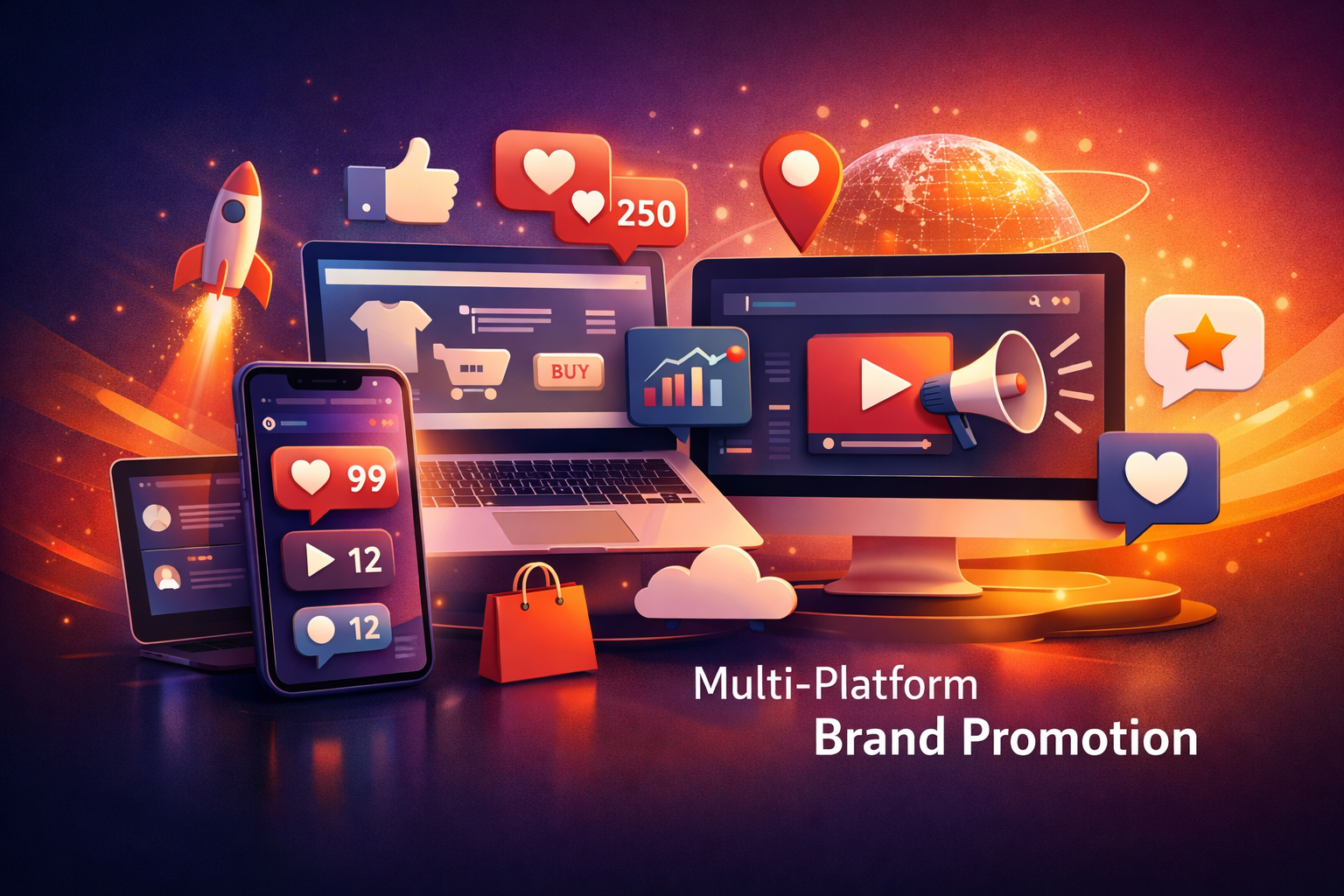

Multi-platform brand promotion helps brands stay visible by connecting social media, print, online, and offline campaigns into one clear story.
It rarely starts with a big campaign. More often, it begins with a simple idea and a question: where will people actually notice this brand? Not just online. Not just offline. Everywhere it matters. That’s where multi-platform brand promotion comes in. It’s the art of showing up across screens, pages, streets, and spaces—without feeling repetitive or forced. One message. Many moments.
Today, people scroll in the morning, skim a magazine at lunch, and spot a billboard on the way home. So brands can’t live in one place anymore. They have to move, adapt, and stay familiar. When social media, print, and real-world campaigns work together, the brand feels present, not pushy. And that balance? That’s where real visibility begins.
What Multi-Platform Brand Promotion Really Means
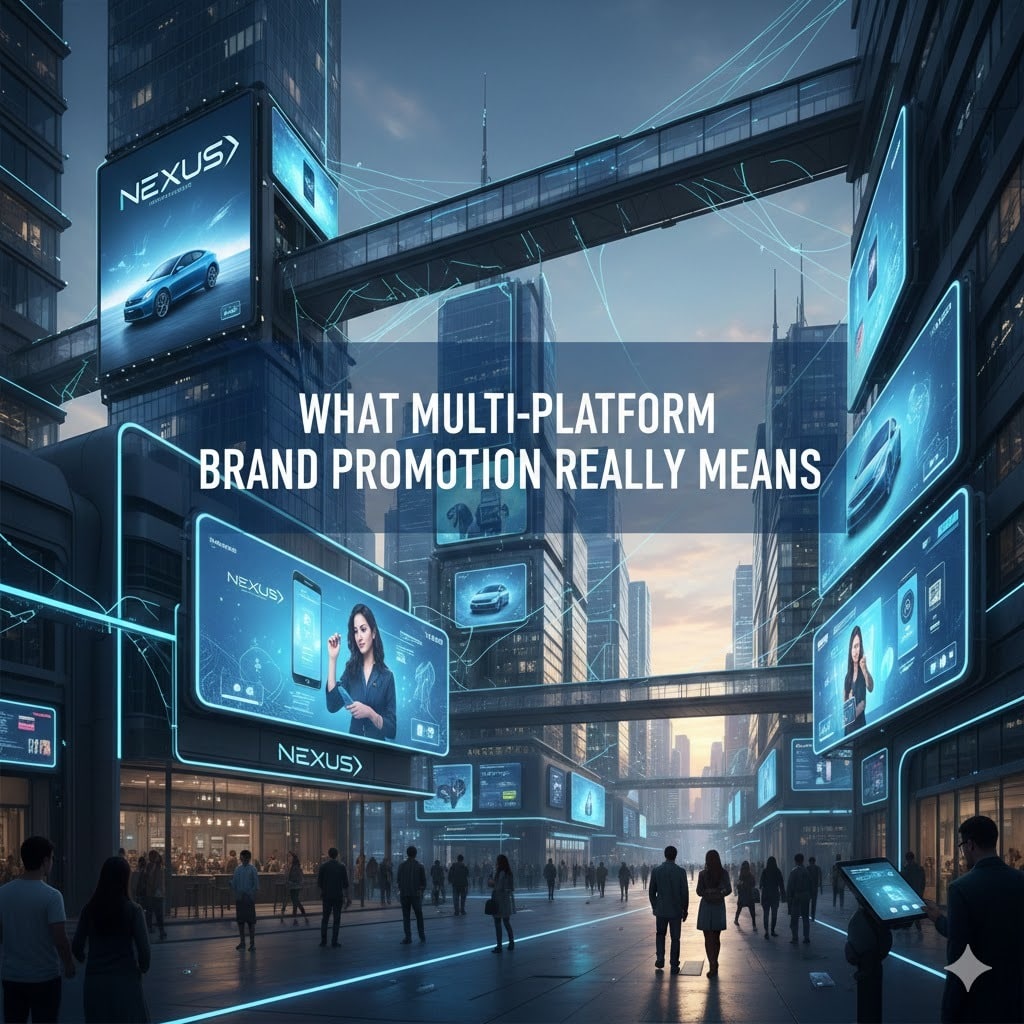
At first glance, it sounds complicated. Multiple platforms, channels and messages. But in practice, it’s much simpler than people think. Multi-platform brand promotion isn’t about being everywhere at once. It’s about being intentional. It means choosing the right places to show up and making sure the brand feels familiar each time someone sees it. Think of it like a conversation that doesn’t happen in one sitting. It carries on across days, formats, and moments.
More Than Posting Everywhere
A common mistake is assuming multi-platform promotion means copying the same message and pasting it across social media, print ads, websites, and billboards. That approach usually falls flat. People notice repetition, but not in a good way.
Instead, the idea stays the same, while the delivery changes. A story told in a social post might become a bold visual in print. That same idea could later show up in a short video or an event banner. The tone shifts slightly. The format changes. But the core message stays steady. That consistency is what builds recognition. And recognition is what turns exposure into trust.
One Brand, Many Touchpoints
People don’t experience brands in a straight line. They bounce around. They discover a brand on social media. Later, they see it in a magazine. A few days after that, they walk past a storefront or an outdoor ad.
Multi-platform brand promotion works when all those moments feel connected. Not identical. Connected. When the colors feel familiar. When the voice sounds the same. Also, When the message doesn’t need explaining again. Each touchpoint quietly reinforces the last one. Over time, that repetition does something powerful. It makes the brand feel established, even if it’s still growing.
Online And Offline Working Together
Digital platforms move fast. Print and physical campaigns move slower. And that contrast is actually a strength. Online channels build frequency. Offline channels build presence.
A social ad can introduce a message. A print ad can make it feel real. An event or outdoor campaign can make it memorable. When these pieces support each other, the brand feels larger than any single channel. This is where strategy matters. Agencies like Impact Authority often focus on aligning online and offline efforts so they don’t compete for attention. They complement each other instead.
It’s About Clarity, Not Noise
The goal of multi-platform brand promotion is not to be louder. It’s to be clearer. When a brand jumps from platform to platform without a plan, the message gets muddy. But when each channel has a role, the story stays sharp. Social media might spark interest. Print might add credibility. Offline campaigns might deepen trust. Each part plays its role. No channel carries the whole weight.
The Long-Term View
Multi-platform brand promotion isn’t built for overnight wins. It’s built for familiarity over time. The more often people see a brand in different settings, the more real it feels. And the more real it feels, the easier it becomes to choose. That’s the quiet power behind doing it right. Not showing up everywhere. Just showing up consistently, in the right places, with the same clear voice.
The Role of Social Media: The Daily Touchpoint
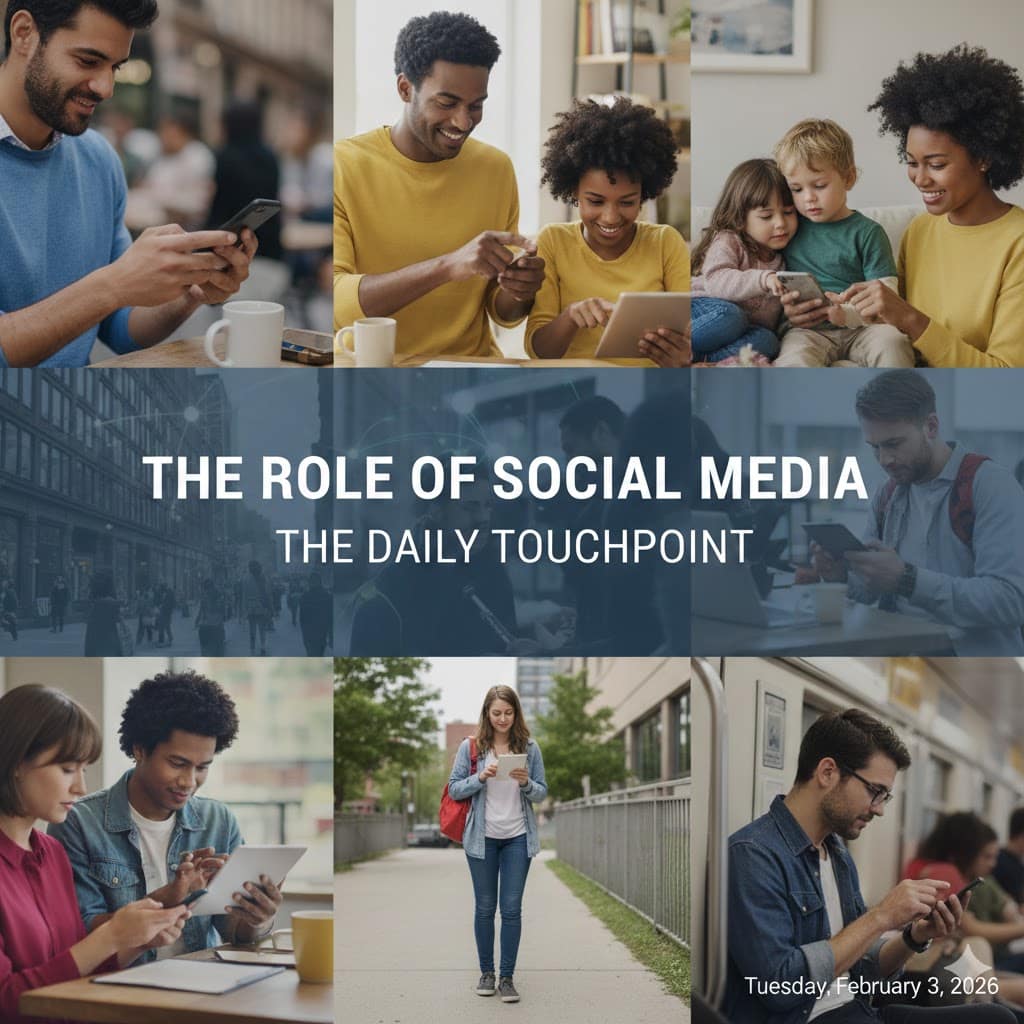
Social media doesn’t announce itself. It just shows up. Every morning. Every night. In between meetings, meals, and moments that weren’t planned. That’s what makes it different. In multi-platform brand promotion, social media isn’t the headline act. It’s the background presence. The place where brands stay visible even when nothing else is happening.
Where Brands Stop Sounding Like Brands
People don’t open social media looking for ads. They open it to see what’s going on. That changes everything. Here, tone matters more than perfection. A slightly off caption can feel more real than a polished one. A quick reply can do more work than a full campaign line. Over time, these small, unremarkable moments add up. The brand starts to feel familiar. Not impressive. Familiar.
Showing Up Beats Showing Off
There’s always a new trend. A new format. A new way to chase attention. Most of them fade just as fast. What doesn’t fade is consistency. Posting regularly, even when the content feels simple, keeps the brand in the room. Disappear for too long and people forget. Not on purpose. It just happens. That’s the quiet job of social media. It fills the space between big ideas.
One Message, Different Moods
Every platform has its own rhythm. Some move fast, linger. Some reward visuals. Others reward words. Trying to force the same message everywhere rarely works. But adjusting the mood while keeping the idea intact does. The brand stays recognizable. The delivery stays flexible. That balance keeps repetition from feeling boring.
How It Connects Everything Else
A billboard makes a statement. A print ad makes an impression. An event creates a memory. Social media keeps those moments alive. It reminds people what they saw, adds context and extends the life of offline and online efforts without asking for more attention than necessary. Without this layer, campaigns feel isolated. With it, they feel connected.
Listening, Not Just Posting
Numbers matter. But they don’t tell the full story. Comments reveal tone. Messages reveal interest. Silence reveals confusion. Social media shows these signals instantly, if brands are paying attention. That feedback loop helps shape what comes next. Not perfectly. Just better.
The Everyday Thread
Social media doesn’t carry the whole weight of brand promotion. It was never meant to. But it holds the thread. The daily reminder. The familiar voice. And in a crowded landscape, that quiet presence often does more than the loudest campaign ever could.
Print Advertising: Still Powerful, Just Different
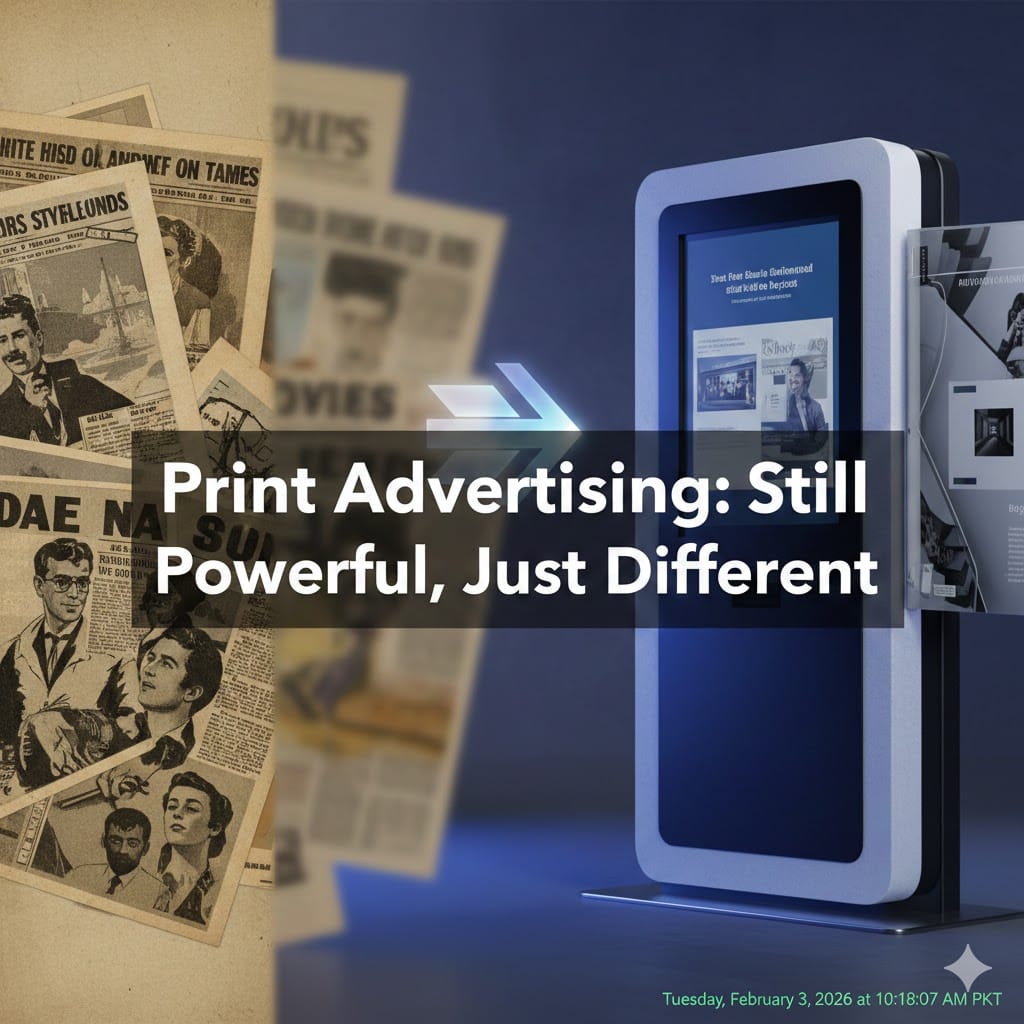
Print doesn’t try to chase you. It waits. A magazine on a table. A newspaper folded on a chair. A poster you pass every day without realizing it’s working on you. That quiet presence is exactly why print still matters. In multi-platform brand promotion, print plays a very specific role. It slows things down. It adds weight. And it makes messages feel real.
Why Print Still Earns Attention
Screens move fast. Too fast, sometimes. People scroll, tap, and swipe without stopping. Print doesn’t live in that rush. When someone picks up a magazine or pauses at a print ad, they’re already giving more focus. Not because the message is louder, but because the medium demands it.
Print advertising benefits from this pause. The paper, the texture, the layout. All of it signals intention. And intention builds trust.
Trust Comes From Tangibility
There’s something about holding a printed piece that feels different. It’s physical. It exists in the real world. That presence matters. A print ad feels considered. Planned. Permanent, even if it’s not. It tells the reader that the brand invested time and care.
As a result, print often carries more credibility than fast-moving digital content. It doesn’t replace online efforts. Instead, it reinforces them.
Where Print Fits Best Today
Print works best when it knows its place. Magazines allow space for storytelling. Newspapers bring authority and reach. Brochures support decisions. Outdoor print builds familiarity through repetition.
Local campaigns benefit especially well. Seeing a brand in a local publication or on a neighborhood street builds relevance. It feels closer. More personal. The key is alignment. Print should echo the same idea running across digital and offline channels. When it does, the message lands deeper.
Design Does The Heavy Lifting
In print, words matter. But design carries equal weight. Clean layouts invite the eye. White space lets messages breathe. Strong visuals say what text doesn’t need to explain. Unlike digital ads, print doesn’t rely on motion or sound. It relies on clarity. That simplicity forces brands to sharpen their message. And when the message is clear, it sticks.
Print And Digital, Not Print Versus Digital
The real strength of print shows up when it connects to digital efforts. A print ad might introduce the idea. Digital channels continue the conversation. QR codes, URLs, and visual cues bridge the gap without effort.
This connection keeps print from feeling isolated. Instead, it becomes part of a larger system. One that moves smoothly between online and offline worlds.
The Quiet Strength Of Print
Print doesn’t need constant updates. It doesn’t fight for attention. It just stays. In multi-platform brand promotion, stability matters. Print anchors the brand. It adds seriousness without sounding stiff. It balances the speed of digital with something more grounded. Still powerful. Just different. And when used well, surprisingly effective.
Online Brand Campaigns: Speed, Scale, Precision
Online campaigns move fast. Sometimes too fast to notice at first. A banner flashes by. A video plays for a few seconds. A message lands, then disappears. Yet, when done right, those moments add up. Within multi-platform brand promotion, online campaigns handle the momentum. They push ideas out quickly, test reactions, and adjust in real time.
Speed That Keeps Brands Relevant
The biggest strength of online campaigns is speed. Messages go live instantly. Updates happen without delay. If something works, it scales. If it doesn’t, it shifts. That flexibility matters. Trends change. Audiences move. Online campaigns keep brands from falling behind. Instead of waiting weeks for feedback, results show up almost immediately. Clicks. Views. Engagement. Each signal offers direction.
Reaching The Right People, Not Just More People
Scale doesn’t mean shouting at everyone. It means reaching the right audience at the right time. Online platforms allow precise targeting. Interests. Locations. Behaviors. Even timing plays a role. A message can reach someone when they’re most likely to notice it. This precision keeps campaigns efficient. Less waste. More relevance. And when relevance increases, so does recall.
Testing, Learning, And Refining
Online campaigns thrive on testing. Different headlines. Different visuals. Slight changes in tone. Small adjustments can reveal big insights. Over time, patterns emerge. What people respond to. What they ignore. This learning loop strengthens future efforts. Each campaign leaves behind data that shapes the next one. And while numbers don’t tell the whole story, they help guide smarter decisions.
The Connection To Offline Efforts
Online campaigns work best when they don’t stand alone. They often support Online and offline brand campaigns by extending reach and reinforcing messages. A print ad might introduce the idea. An online campaign keeps it active. An event might create a moment. Online content keeps it visible. This back-and-forth creates continuity. Audiences don’t feel like they’re seeing separate campaigns. They experience one evolving story.
Consistency Across Fast-Moving Channels
Speed can be a risk. When campaigns move quickly, messages can drift. That’s why consistency matters. Visuals. Voice. Core ideas. Even as formats change, the brand should feel the same.
When online campaigns stay aligned with the broader strategy, they strengthen the brand instead of fragmenting it.
Precision With Purpose
Precision isn’t just about targeting. It’s about intention. Every online campaign should know its role. Awareness. Engagement. Recall. Support. When that role is clear, messaging becomes sharper.
Within multi-platform brand promotion, online campaigns deliver efficiency. They respond quickly. They reach widely. And they adapt constantly. Not by overwhelming audiences. But by meeting them where they already are, with messages that feel timely and relevant.
Offline Brand Campaigns: The Physical Experience
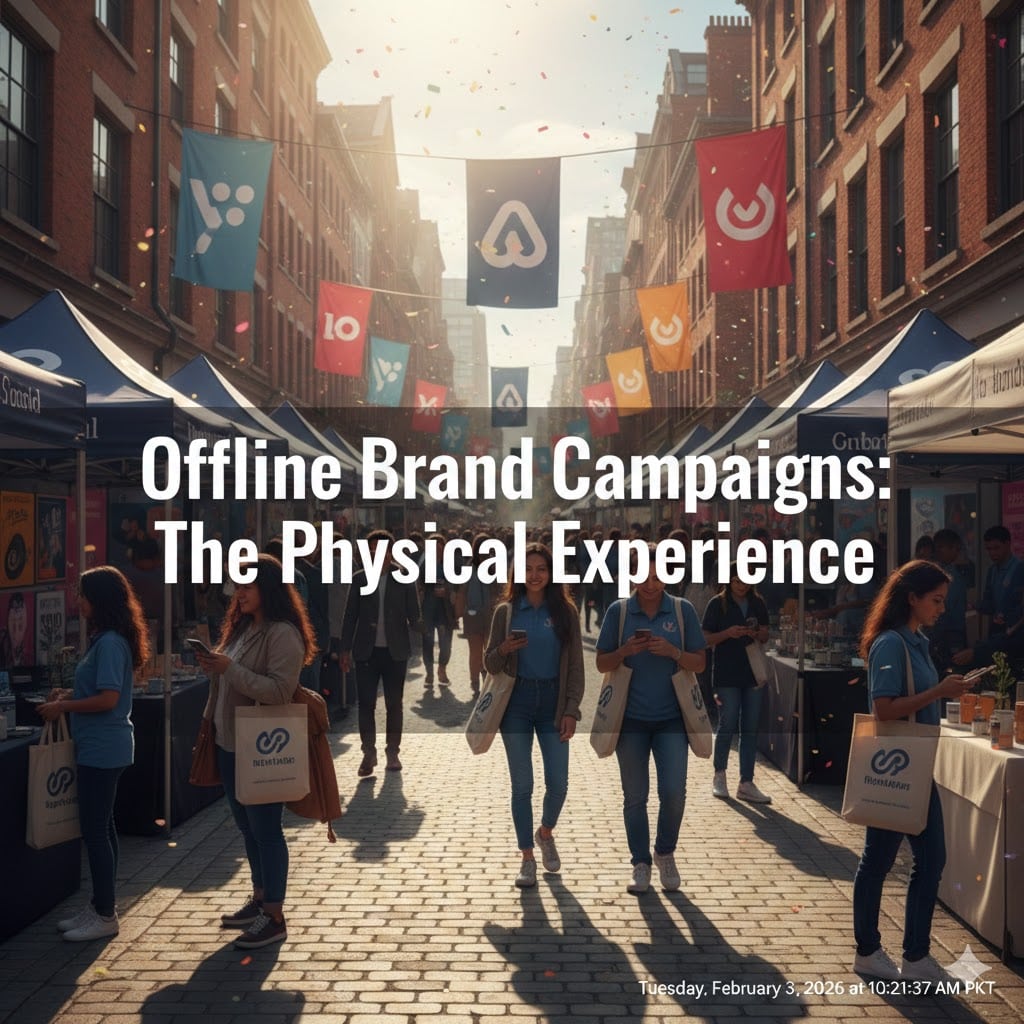
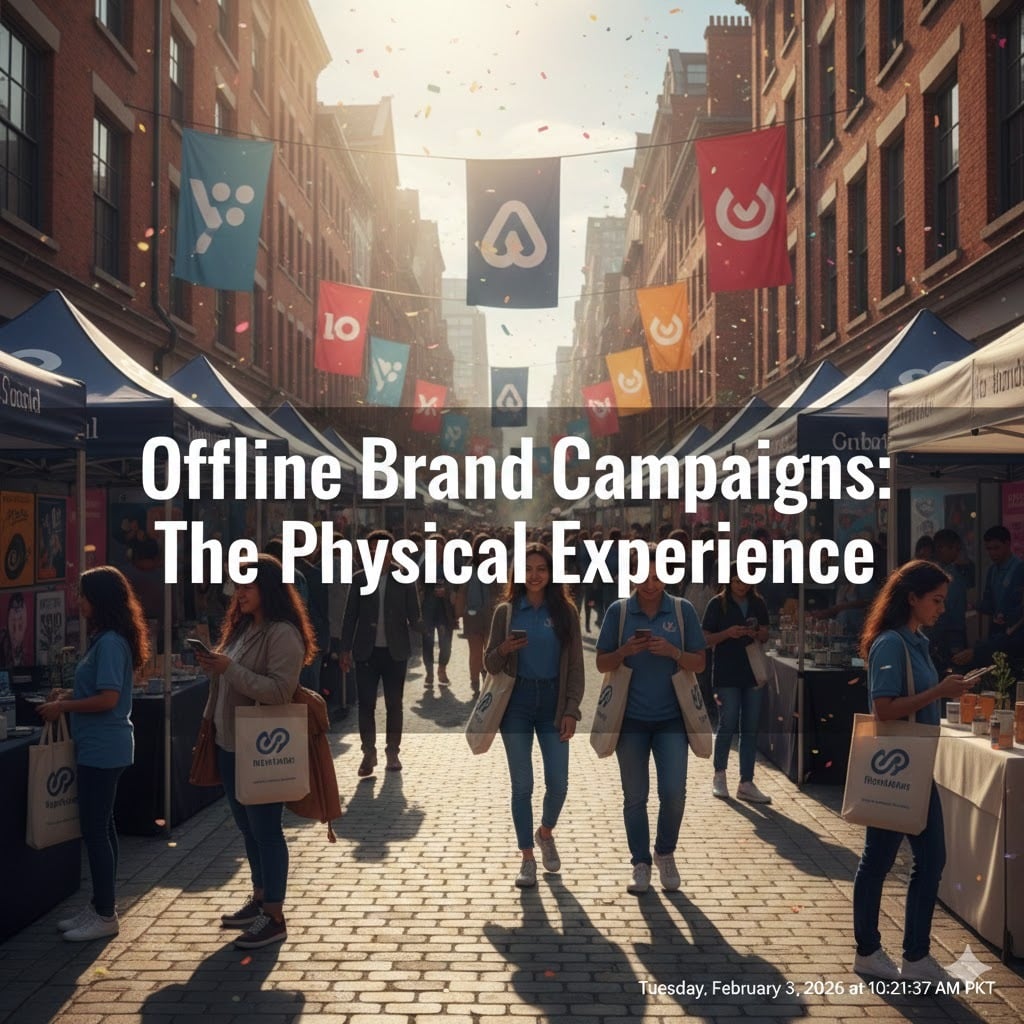
Offline campaigns live in the real world. You don’t scroll past them, walk into them or stand next to them. Sometimes, you remember them long after the moment has passed.
That physical presence changes everything. In multi-platform brand promotion, offline brand campaigns add depth. They turn messages into experiences. And they make brands feel tangible, not just visible.
When Brands Step Into Real Life
Offline campaigns meet people where they are. On the streets. At events. Inside stores. At places people already trust.
A billboard isn’t just an ad. It becomes part of the daily route. An event isn’t just promotion. It becomes a memory. A pop-up isn’t just a display. It becomes an interaction. Because these moments happen in the physical world, they carry more weight. They ask for attention, but they also earn it.
Experiences People Can Feel
Offline campaigns engage more than just the eyes. There’s sound. Movement. Texture. Space. All working together. A handshake at an event. The atmosphere of a launch. The scale of an outdoor installation.
These details stick. Not because they’re flashy, but because they’re real. People remember how something felt long after they forget what it said. That emotional layer is hard to replicate online. And that’s exactly why offline still matters.
Out-Of-Home Advertising And Presence
Out-of-home campaigns build familiarity through repetition. Seeing the same message on a billboard, a bus shelter, or a street sign creates recognition. Over time, the brand feels established. Trusted. Present.
Location plays a big role here. A well-placed ad can feel relevant. Poor placement feels random. The difference shows. Offline visibility works best when it’s intentional, not everywhere.
Events, Activations, And Community
Events and activities slow people down. They invite participation. Conversations. Questions. Real engagement. Whether it’s a small local gathering or a large public activation, the goal stays the same. Connection.
Community-focused campaigns often leave the strongest impression. When a brand shows up locally, it feels closer. More human. That proximity builds trust faster than any message alone.
Supporting The Bigger Campaign
Offline campaigns rarely work in isolation. They strengthen Online and offline brand campaigns by anchoring digital messages in reality. A digital ad might spark interest. An offline experience confirms it.
When people encounter the same idea online and then in the real world, it feels intentional. Not repetitive. Reinforced. That alignment keeps the brand story clear across channels.
The Role Of Offline In The Bigger Picture
Offline campaigns don’t need to be constant. They need to be memorable. In multi-platform brand promotion, they add presence and permanence. They slow down the fast pace of digital. They give people something real to connect with. Not louder. Just deeper. And often, that depth is what turns awareness into belief.
Conclusion
Brand promotion doesn’t work in pieces anymore. It works in patterns. People move between screens and streets without thinking about it. They scroll, pause, walk, notice, and move on. And the brands that stay with them are the ones that feel familiar at every step.
That’s the real strength of multi-platform brand promotion. It brings everything together. Social keeps the conversation alive. Print adds trust. Online campaigns create momentum. Offline moments make it real. Each channel does its part, then steps back.
Most importantly, it’s not about being everywhere. It’s about showing up with purpose. The same idea, told in different ways, at the right time. When all of it connects, the brand stops feeling like a campaign. It feels like a presence. Quiet. Consistent. And strong enough to last well beyond the first impression.