


Integrated communications solutions help brands speak with one clear voice across marketing, PR, and corporate communication channels.
It rarely falls into place on its own. Messages get sent. Campaigns go live. Teams stay busy. Yet somehow, the story feels scattered. That’s where most brands get stuck—not from lack of effort, but from lack of alignment.
This is where Integrated communications solutions step in. They bring order to the noise. Instead of separate voices across PR, marketing, and corporate messaging, everything starts to move together. One idea leads. Every channel follows.
As a result, communication feels clearer. Stronger. More intentional. Marketing supports PR. Corporate messages reinforce trust. And audiences don’t have to work to understand you. They just get it. That’s the real shift here. Not louder communication, but smarter connection—built to last, and flexible enough to grow.
What Integrated Communications Really Means

At first glance, it sounds simple. Get everyone on the same page. Say the same thing everywhere. But real integration goes deeper than that. It’s not about repeating a message. It’s about shaping one clear story and letting it travel, naturally, across every channel.
Most brands already communicate a lot. Emails go out. Ads run. Press releases land. Social posts fill the calendar. Yet without connection, those efforts feel scattered. Integrated communication changes that. It brings intent into the mix. Every message has a reason. Every channel has a role.
One Story, Many Touchpoints
At the heart of integrated communications is a single narrative. One idea that reflects what the brand stands for and where it’s heading. From there, the story adapts. Not copies itself. Adapts.
A press mention might build trust. A campaign headline might spark interest. A leadership post might add context. Different formats. Different tones. Same core message. That’s how consistency works without sounding repetitive.
This is where Integrated communications solutions earn their value. They don’t flatten the message. They guide it. Moreover, They help teams stay aligned while still speaking in ways that feel right for each platform.
Consistency Without Sounding Scripted
There’s a fine line between being consistent and being boring. Integrated communication respects that line.
Instead of rigid scripts, it relies on shared understanding. Teams know the brand voice. They understand the priorities. So even when messages change shape, they still feel familiar. Recognizable. Humans. As a result, audiences don’t feel talked about. They feel spoken to. And that difference matters more than most metrics ever show.
Alignment Before Amplification
Many brands rush to amplify. More channels, content and noise. Integration flips that order. First comes alignment. Marketing, PR, and corporate communication agree on what matters most. Then, and only then, the message goes out. Stronger. Clearer. More confident.
This approach also saves time, and fewer rewrites and less confusion. Fewer moments of “Who approved this?” Everyone moves faster because everyone understands the direction. That’s why agencies like Impact Authority focus on structure before scale. When the foundation is solid, growth feels controlled, not chaotic.
Strategy Over Activity
Integrated communication isn’t about doing more. It’s about doing things with purpose. Every campaign connects to a larger goal. Every message supports a bigger picture. Even silence becomes strategic. Sometimes, not speaking is part of the plan.
Over time, this creates trust. Internally, teams feel aligned. Externally, audiences feel clarity. The brand stops reacting and starts leading.
That’s what integrated communications really mean. Not a checklist. Not a trend. But a smarter way to communicate—one clear voice, moving steadily, no matter where the conversation happens.
The Role of Corporate Communication Strategies

Nothing holds together without a center. In communication, that center is strategy. Without it, messages drift. They sound fine on their own, but they don’t add up to anything meaningful. That’s why corporate communication plays such a quiet yet powerful role. It sets direction before words ever reach the outside world.
At its core, this is about clarity. What does the company stand for? What does it want to be known for? And just as important, what does it choose not to say? Strong corporate communication strategies answer those questions early. They give shape to every message that follows.
Defining the Core Narrative
Every organization has a story, whether it tells it or not. The difference is intention. A clear narrative acts like a compass. It keeps leadership messages, internal updates, and public statements pointing in the same direction. Not identical. Just aligned. When teams understand the bigger picture, they don’t have to guess what “sounds right.” They already know.
This is where integrated thinking begins to matter. With Integrated communications solutions in place, the narrative doesn’t live in one document or one department. It moves. It adapts. And it stays recognizable, even as the context changes.
Leadership Communication and Trust
People listen to leaders differently. They expect honesty. They expect confidence. And above all, they expect consistency.
When leadership communication is aligned with the broader strategy, trust builds naturally. Employees feel informed, not surprised. External audiences feel steadiness, even during change. Over time, this consistency becomes a signal. It tells people the organization knows who it is.
That doesn’t mean leaders speak in polished soundbites. In fact, the opposite often works better. Plain language. Clear intent. Fewer layers. When leadership speaks like real people, the message travels further and lands stronger.
Internal Communication Comes First
Before any message goes public, it passes through the inside of the organization. Or at least, it should.
Internal communication sets the tone. It shapes culture. It turns employees into informed participants instead of passive listeners. When teams understand the “why,” they communicate the “what” more naturally outside the company.
This internal alignment also reduces friction. Fewer mixed signals, corrections and moments of backtracking. Everything feels more deliberate because it is.
Strategy During Pressure and Change
Moments of pressure reveal weak communication fast. Crises, leadership shifts, market changes—they all test the system.
A strong corporate communication strategy doesn’t eliminate challenges. But it does provide a framework. Messages stay calm. Responses stay focused. And decisions feel less reactive.
Instead of scrambling, teams lean on what’s already been defined. The voice holds. The message stays clear. Even when the situation isn’t.
In the end, corporate communication isn’t about control. It’s about direction. It gives structure to ideas and purpose to words. And when it works hand in hand with integrated communication, it becomes the steady force that keeps everything moving together.
Marketing and PR Integration
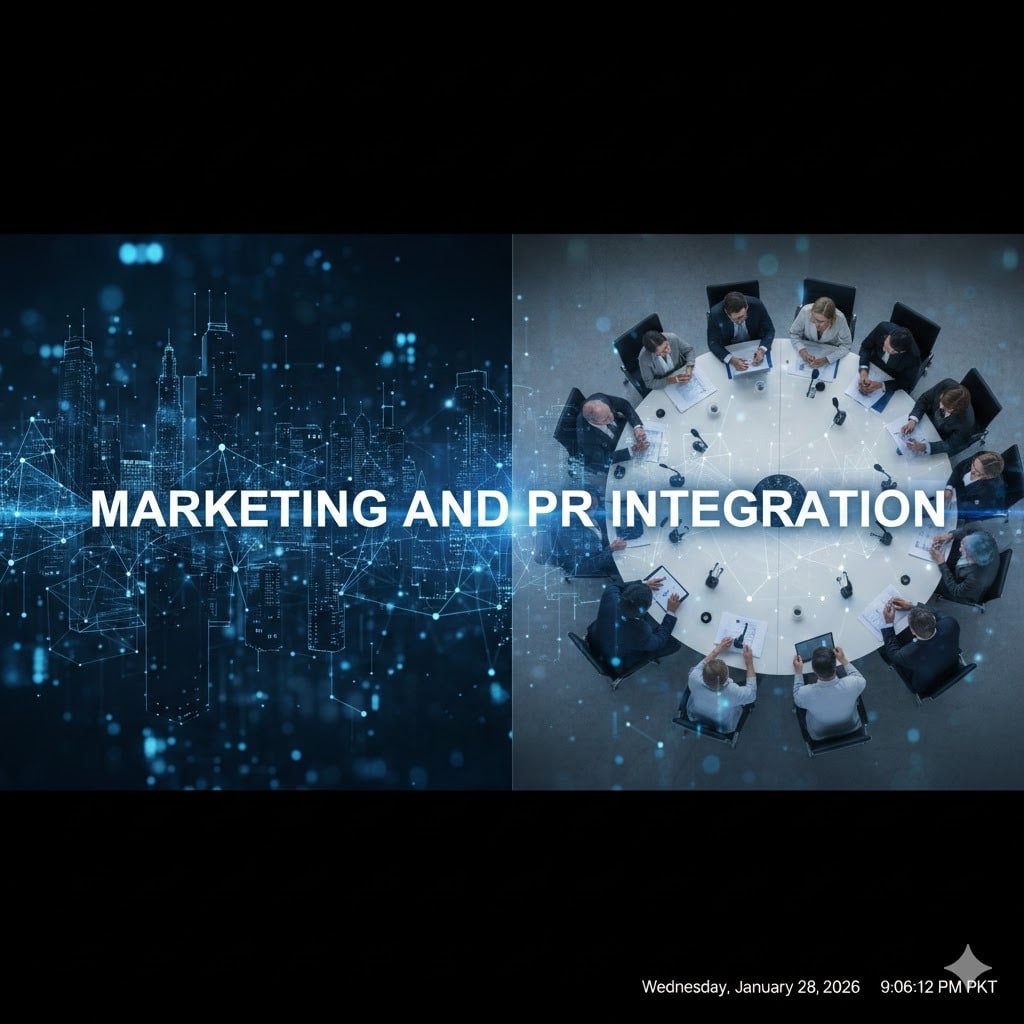
For a long time, marketing and PR lived in separate rooms. Marketing pushed campaigns. PR built credibility. Both worked hard. Yet too often, they spoke past each other. Today, that split doesn’t hold up. Audiences don’t separate messages by department. They hear one brand, or they hear confusion.
That’s why integration matters. When marketing and PR move together, communication feels intentional. Clear. Believable. And more importantly, it feels human.
Why Separation No Longer Works
Marketing is great at visibility. PR is strong at trust. On their own, each has limits. Marketing without credibility feels loud. PR without reach stays quiet.
When these two functions stay disconnected, messages collide instead of supporting each other. A bold campaign might say one thing, while a media story suggests another. Even small gaps can raise doubts.
This is where Marketing and PR integration changes the game. It aligns goals early. It ensures that what’s promoted matches what’s promised. And it keeps the brand from pulling itself in different directions.
From Campaigns to Conversations
Integration shifts the focus. Instead of launching isolated campaigns, brands start building conversations.
PR sets the context. It shapes the narrative and earns attention. Marketing then carries that story forward, extending reach and reinforcing meaning. One doesn’t replace the other. They trade momentum.
This flow feels more natural to audiences. They encounter the idea first through credibility, then through repetition that adds value instead of noise. Over time, recognition grows. So does trust. With Integrated communications solutions, this handoff becomes smoother. Teams plan together. Messages evolve together. And timing starts to matter just as much as content.
Shared Planning, Stronger Outcomes
Real integration begins before anything goes live. When marketing and PR teams plan side by side, priorities sharpen. Key messages stay consistent. Content works harder because it’s connected to a larger purpose. Even creative choices feel more grounded.
Shared calendars help. So do joint briefs. But alignment isn’t just about tools. It’s about mindset. Teams stop asking, “Is this a marketing piece or a PR story?” and start asking, “Does this move the story forward?” That single question simplifies a lot.
Supporting Long-Term Brand Value
Not every effort needs to be converted immediately. Some messages exist to build reputation. Others drive action. Integration respects both.
PR reinforces long-term credibility. Marketing keeps the brand visible and relevant. Together, they balance patience with performance. Short-term wins don’t undermine long-term trust.
Over time, this balance becomes a strength. The brand feels steady, not reactive. Confident, not pushy. Familiar, but never stale.
In the end, marketing and PR work best when they stop competing for space and start sharing direction. When they do, the brand speaks with one voice. Clear. Consistent. And strong enough to be remembered long after the campaign ends.
Cross-Channel PR Campaigns That Actually Connect

Getting coverage is one thing. Making it matter is another. Many PR campaigns show up in multiple places but still feel disconnected. The message changes. The timing feels off. And the impact fades fast. Real connection doesn’t come from being everywhere. It comes from showing up with purpose.
That’s the difference well-planned cross-channel PR campaigns bring to the table. They don’t chase visibility alone. They focus on clarity, flow, and relevance.
Choosing Channels With Intention
Not every story belongs everywhere. And that’s okay. Some messages work best in earned media, where credibility leads. Others feel more natural on social platforms, where conversation matters. Owned channels, like blogs or newsletters, add depth. Each channel plays a role, but only when chosen with care.
Instead of asking, “Where can we post this?” smart teams ask, “Where does this make sense?” That shift alone improves results. The message lands better because it fits the space it’s in.
With Integrated communications solutions, this decision-making becomes easier. The strategy already defines the goal. Channels simply support it.
One Message, Many Shapes
Consistency doesn’t mean copying and pasting. It means staying true to the idea while letting the format change. A media interview might focus on insight. A social post might highlight one strong line. A follow-up article might explain the bigger picture. Same message. Different entry points.
This flexibility keeps audiences engaged. They don’t feel like they’re hearing the same thing on repeat. Instead, they feel like they’re learning more each time they come across the story.
Timing Makes the Difference
Even the best message can fall flat if the timing is wrong. Cross-channel campaigns work best when they’re sequenced, not scattered. Earned coverage can lead. Social can respond. Owned content can deepen the conversation. Each step builds on the last.
This rhythm creates momentum. It gives the story room to breathe instead of forcing everything out at once. And it keeps the message alive longer, without extra effort.
Keeping the Human Touch
PR works best when it sounds real. Not overly polished. Not overly careful. Across channels, tone should feel familiar, even when formats change. People should recognize the voice, whether they’re reading a quote, scrolling a post, or opening an email. That familiarity builds comfort. And comfort builds trust.
When teams stay aligned, this happens naturally. No forced scripts. No awkward shifts in tone. Just clear communication that feels like it comes from one place.
Measuring What Actually Matters
Reach is useful. Engagement helps. But the connection goes deeper. Strong cross-channel PR looks at how messages travel. Do people reference them? Do they spark discussion? Also, Do they support long-term reputation? These signals take time, but they tell a better story than numbers alone.
In the end, connection isn’t accidental. It’s designed. When PR campaigns move across channels with intention, clarity, and care, they stop feeling scattered. They start feeling meaningful. And that’s when people truly pay attention.
Tools and Systems That Support Integration
Integration doesn’t happen by accident. It needs support. Not just from people, but from the systems they use every day. The right tools don’t replace strategy. They protect it. They make alignment easier to maintain, especially as teams grow and messages multiply. Still, it’s not about having more software. It’s about having the right structure behind the scenes.
Collaboration Starts With Visibility
When teams can see what others are working on, communication improves fast. Shared calendars help everyone understand timing. Joint planning spaces reduce overlap. Simple visibility prevents mixed messages before they ever reach the public. Instead of reacting late, teams adjust early.
This kind of transparency also builds trust internally. Marketing knows what PR is planning. PR understands leadership priorities. No one works in isolation, and that alone removes a lot of friction.
Message Libraries Keep Everyone Aligned
One of the most useful systems is also one of the simplest. A shared message library. This isn’t a script. It’s a reference point. Key themes. Core talking points. Approved language that reflects the brand’s voice. When teams pull from the same source, consistency becomes natural, not forced.
Over time, this supports Integrated communications solutions by reducing guesswork. New team members onboard faster. External partners stay aligned. And the message stays steady, even as campaigns change.
Dashboards That Show What’s Working
Data doesn’t have to feel overwhelming. Used well, it adds clarity. Simple dashboards help teams see what’s landing and what’s not. Media coverage. Engagement trends. Content performance. When insights are shared openly, decisions improve.
The goal isn’t to chase numbers. It’s to learn. Patterns start to emerge. Timing gets sharper. Messaging improves with each cycle. Strategy becomes something you refine, not rewrite.
Process Over Platforms
Tools matter, but process matters more. Without clear workflows, even the best systems fall apart. Who approves what? When does PR step in? How does marketing adapt the message? Defined processes answer these questions before they turn into problems. When workflows are clear, tools simply support them. They don’t create confusion. They reduce it.
Integration That Scales
As organizations grow, communication gets harder. More people, channels and pressure. Strong systems make scale manageable. They hold the structure steady while allowing flexibility at the edges. Teams can move fast without drifting off course.
In the end, tools and systems don’t create integration on their own. People do. But the right setup makes it easier to stay aligned, even when things move quickly. That’s the quiet power behind integrated communication. When systems work in the background, the message stays clear out front.
Common Mistakes That Undermine Integration

Even with the best intentions, things can slip. Integration sounds simple in theory, but in practice, small missteps can weaken the whole effort. The good news? Most of these mistakes are easy to spot once you know where to look.
Treating Integration Like a One-Time Task
One of the biggest mistakes is thinking integration is something you “finish.” A framework gets built. A few meetings happen. Then everyone moves on. But communication doesn’t stand still. Teams change. Priorities shift. Channels evolve. When integration isn’t revisited, messages slowly drift apart again.
Strong Integrated communications solutions work because they’re ongoing. They get reviewed. Adjusted. Reconfirmed. Without that rhythm, alignment fades quietly.
Confusing Consistency With Repetition
Consistency doesn’t mean saying the same thing everywhere, word for word. Yet many brands fall into this trap. They copy headlines across platforms. Reuse talking points without context. And end up sounding flat. Or worse, out of place.
Real consistency is about meaning, not wording. The idea stays the same, but the delivery adapts. When teams forget that, messages lose their impact fast.
Over-Automating the Message
Tools are helpful. Automation saves time. But taken too far, it strips away the human touch. Scheduled posts, templated responses, and pre-approved language all have their place. Still, when everything sounds polished and distant, people notice. And they tune out.
Integration works best when systems support people, not replace them. Human judgment still matters. Especially when tone and timing are involved.
Leaving Teams Out of the Loop
Another common mistake is partial integration. Marketing aligns with PR, but internal teams stay uninformed. Leadership speaks one way, while customer-facing teams speak another. The gaps show quickly.
When people inside the organization don’t understand the message, they can’t support it. Alignment has to include everyone who communicates, not just the loudest channels.
Chasing Trends Instead of Clarity
New platforms appear. Formats change. Trends move fast. It’s tempting to jump in early and often. But when brands chase every trend without filtering it through their core message, communication becomes scattered again.
Integration doesn’t mean being everywhere. It means being clear wherever you show up. Clarity always outperforms novelty in the long run.
Ignoring Feedback and Signals
Sometimes the message is clear. It’s just not landing. When teams ignore feedback—low engagement, mixed reactions, internal confusion—they miss the chance to adjust. Integration isn’t about sticking to a plan no matter what. It’s about learning and refining as you go.
Listening is part of the process. In the end, most integration mistakes come down to one thing: forgetting the bigger picture. When teams stay focused on purpose, people, and clarity, communication holds together. When they don’t, it quietly starts to unravel.
Conclusion
It never really comes down to saying more. It comes down to saying things better, and saying them together. When communication is aligned, everything feels lighter. Decisions get clearer. Messages land stronger. And audiences don’t have to work to understand what you stand for.
That’s the quiet strength of Integrated communications solutions. They turn separate efforts into one steady voice. Marketing supports PR. Corporate messages add trust. Channels stop competing and start reinforcing each other.
Of course, integration isn’t a finish line. It’s a habit. One that grows with the brand, adapts with the market, and improves with every conversation. But when teams commit to it, the payoff shows quickly.
In the end, people remember clarity. They trust consistency. And they connect with brands that speak with purpose. Get that right, and communication stops feeling like noise—and starts feeling like progress.